
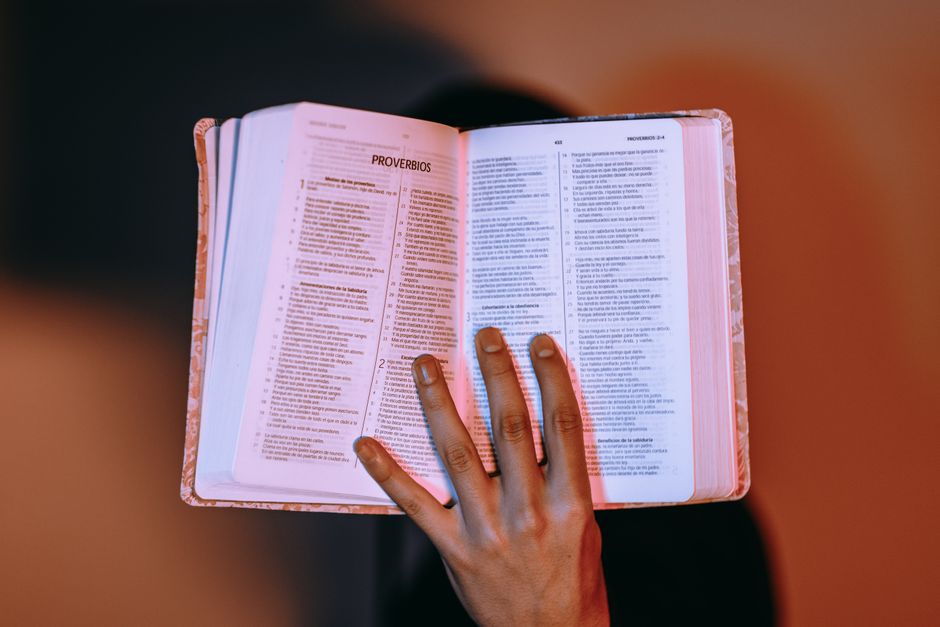
Most Christians who read Scripture daily know the feeling: a verse in Psalms on Monday, a passage from Matthew on Tuesday, another from Proverbs on Wednesday. Each holds real truth, yet they can feel like puzzle pieces from different boxes. A yearlong devotional structure solves this by organizing daily readings into one coherent arc that reveals Scripture's unified story instead of disconnected fragments.
This is exactly what happened when Jean-François Champollion cracked the code of Egyptian hieroglyphics in 1822. Before his breakthrough, scholars saw each hieroglyph as an isolated picture symbol, disconnected from the others. The symbols seemed beautiful but meaningless, decorative marks that refused to cohere into language. Then Champollion, working with copies of the Rosetta Stone (which preserved the same text in hieroglyphic, Demotic, and Greek), realized the glyphs were not just pictures but a functional writing system where symbols worked together to build meaning. Once he grasped that unified principle, individual glyphs he'd studied for years suddenly revealed themselves as part of one coherent language. As documented in scholarly records of the translation, his decipherment opened an entire world of Egyptian thought and history that had been sealed away. For readers of Scripture, the 365-day structure creates something similar: it transforms daily readings from isolated verses into a connected narrative.
The fragment trap
Many devotional apps and printed guides treat each day as its own small story. You read a passage, maybe a reflection on it, maybe a prayer. Then tomorrow arrives and you start fresh with something entirely different. This approach works for people who need quick spiritual fuel, but it leaves the bigger picture untouched.
The Bible itself does not read that way. Scripture is one long story unfolding across centuries: from Genesis's creation through Israel's formation, the law, the prophets, the gospels of Christ, and the early church's struggle to live it out. Each part makes more sense when you see how it connects to what came before and what follows. A verse from Leviticus hits different when you know Abraham's story. The Psalms deepen when you've read the history they reference. The epistles make sense only in light of what Christ actually did.
When devotionals jump randomly, readers miss these connections entirely.
Seeing the whole story
A yearlong devotional that follows Scripture's own arc solves this. You start at the beginning and move through the Bible in the order it actually unfolds. You watch God's story develop: the call of Abraham, the slavery and exodus, the law and rebellion, the prophets calling people back, and finally Christ's arrival and the early church's formation.
Over a year, something changes in how you read. A passage from Isaiah that seems strange on its own suddenly clarifies when you realize it's a prophecy Christ fulfills. A command from the law makes sense when you understand it shaped a whole people's covenant with God. The Psalms stop feeling like random poems and become prayers for every season of the journey Scripture describes.
Readers often report that this structure finally helps them understand why certain passages matter. It is not just a collection of life lessons. It is one unified story of God's action in history, seen through human witnesses over time.
The power of progression
The 365-day framework does something crucial: it creates momentum. Reading one passage a day seems small, but after a month you are 30 readings into the narrative. After three months, the arc is undeniable. By the end of the year, you have lived through Scripture's entire story. That progression matters far more than jumping between books or waiting for an app to suggest something random.
This also solves a practical problem for many Christians: the guilt of missing a day. With a chapter-by-chapter structure, if Monday you skip your reading, Tuesday picks up where you left off. You are never lost. You are never starting over with a different topic. You are always moving forward through one continuous story.
Champollion's breakthrough did not just teach scholars individual hieroglyphic symbols. It revealed an entire writing system, and they could never unsee it again. A year with FreshManna 365 works the same way. Once you've read Scripture as one unified arc, individual passages you encounter later will always connect to that larger story you have come to know.
Comments
No comments yet.